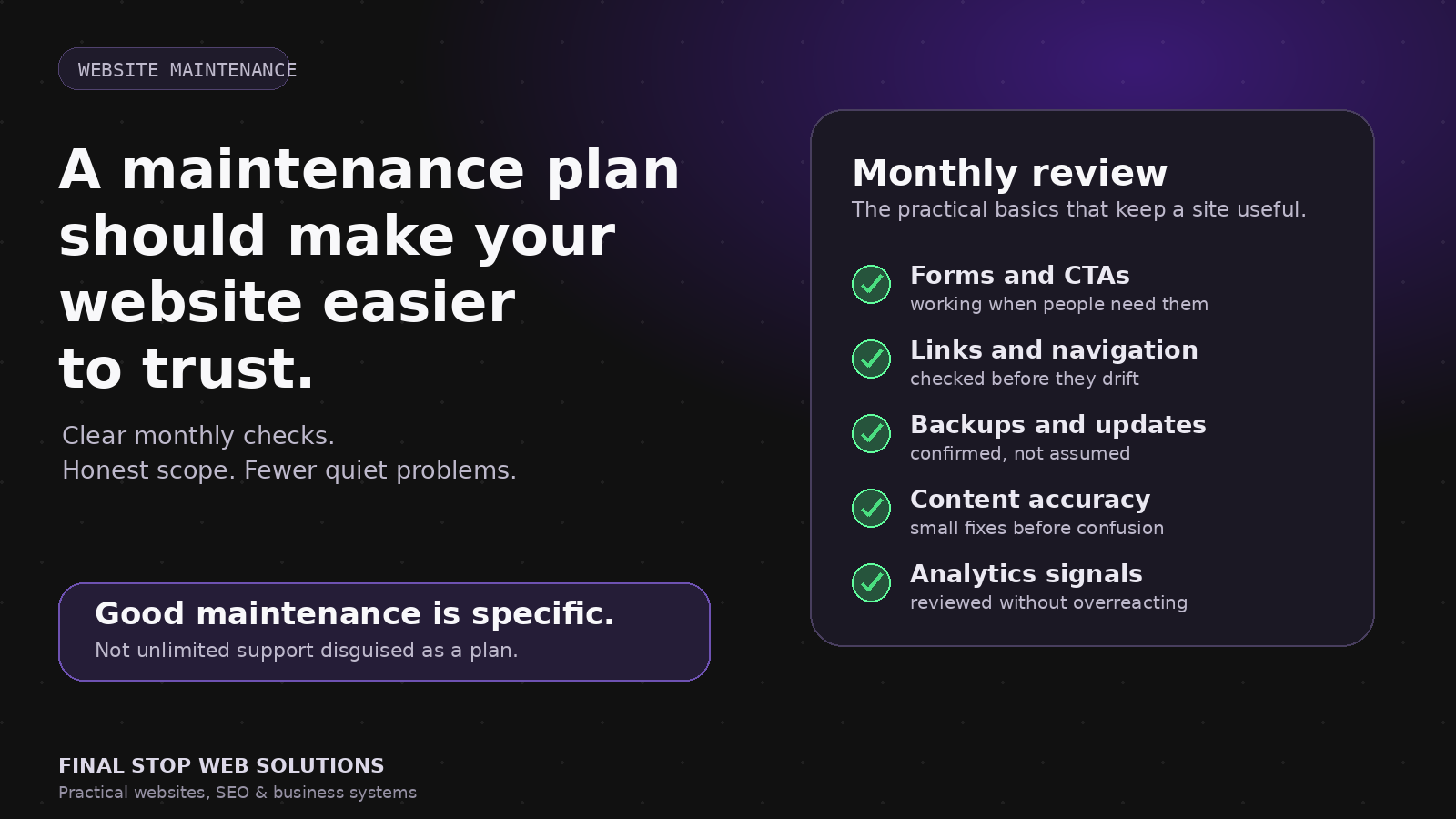
A website maintenance plan should make your site easier to trust, not harder to understand.
For a small business, maintenance is usually not one dramatic task. It is the practical monthly work that keeps the site accurate, backed up, updated, and less likely to quietly drift into problems. That can mean checking forms, reviewing important links, making small approved content updates, watching for obvious technical issues, and making sure the site still reflects what the business actually offers.
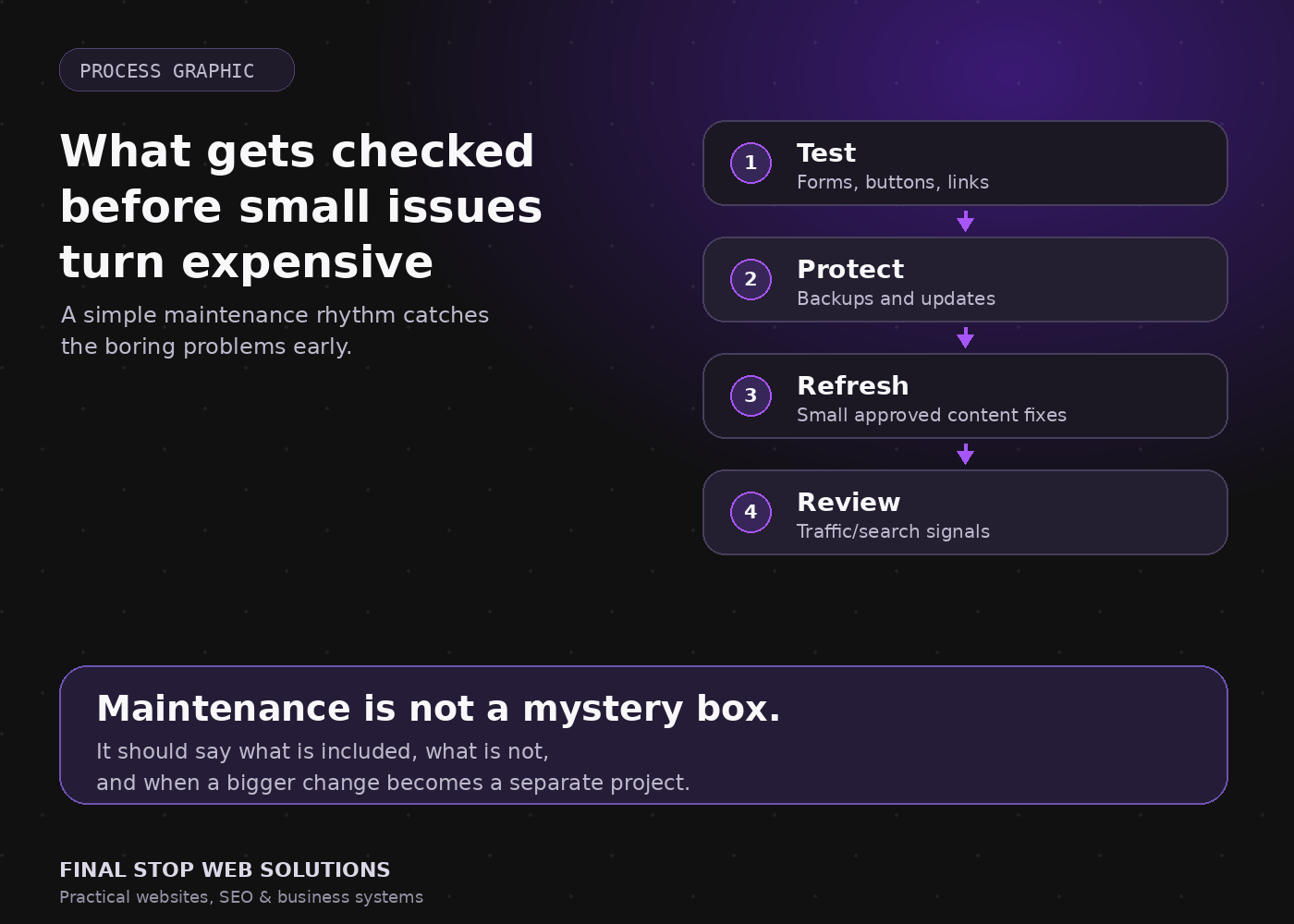
The useful version is clear about what is included, what is not included, and when a bigger change should become a separate project.
Website maintenance is not just keeping the site online
A site can be online and still be quietly working against you. A contact form can break. A service page can mention an old offer. A plugin or integration can need attention. A key link can point to the wrong place. None of those issues are exciting, but they matter when someone is trying to decide whether to contact you.
Maintenance is the habit of catching those small issues before they become trust problems.
What should be checked monthly
A good maintenance rhythm should include the basics:
- contact forms and key calls-to-action
- important links and navigation
- backups and recovery status
- security/software updates where applicable
- page speed or obvious performance issues
- outdated service details, staff info, hours, or pricing notes
- analytics/search visibility signals if reporting is included
What counts as a minor content update
Minor updates are the practical changes that keep the site accurate without turning the month into a redesign project. That might include swapping a short paragraph, updating hours, adding a notice, replacing an image, fixing a broken link, or making a small approved edit to a service page.
The important part is that “minor” is defined ahead of time. Clear scope keeps the maintenance plan useful for the business and fair for the team doing the work.
What is usually outside maintenance scope
Maintenance should not quietly turn into unlimited redesign, new feature development, emergency IT support, or full content strategy unless that is part of the agreement.
If a change needs new layouts, new pages, custom functionality, rewritten service positioning, or a larger SEO/content plan, it is usually better treated as a small project. That keeps expectations clear and avoids surprise work on both sides.
Why forms, links, backups, and checks matter
Most website problems do not announce themselves politely. They show up as a missed lead, a confused visitor, a broken integration, or a small trust signal that feels off. Routine checks reduce the chance of those problems sitting unnoticed for weeks.
That is the practical value of maintenance: fewer quiet problems, clearer ownership, and a website that keeps reflecting the business accurately.
Want a practical review of your current site?
Final Stop can review your website setup, identify obvious maintenance gaps, and help separate quick fixes from bigger project work.